John Aitken MC "Courageous Leader"
Updated: Jul 17, 2025
Major JOHN LAMPERT AITKEN MC
Royal Armoured Corps
3rd County of London Yeomanry (Sharpshooters)
Died 20/09/1944
He is buried at Leopoldsburg War Cemetery Belgium V.B.5
John was the son of Charles and Edith Annie Aitken, of Long Pond House, Totteridge Common, Hertfordshire.
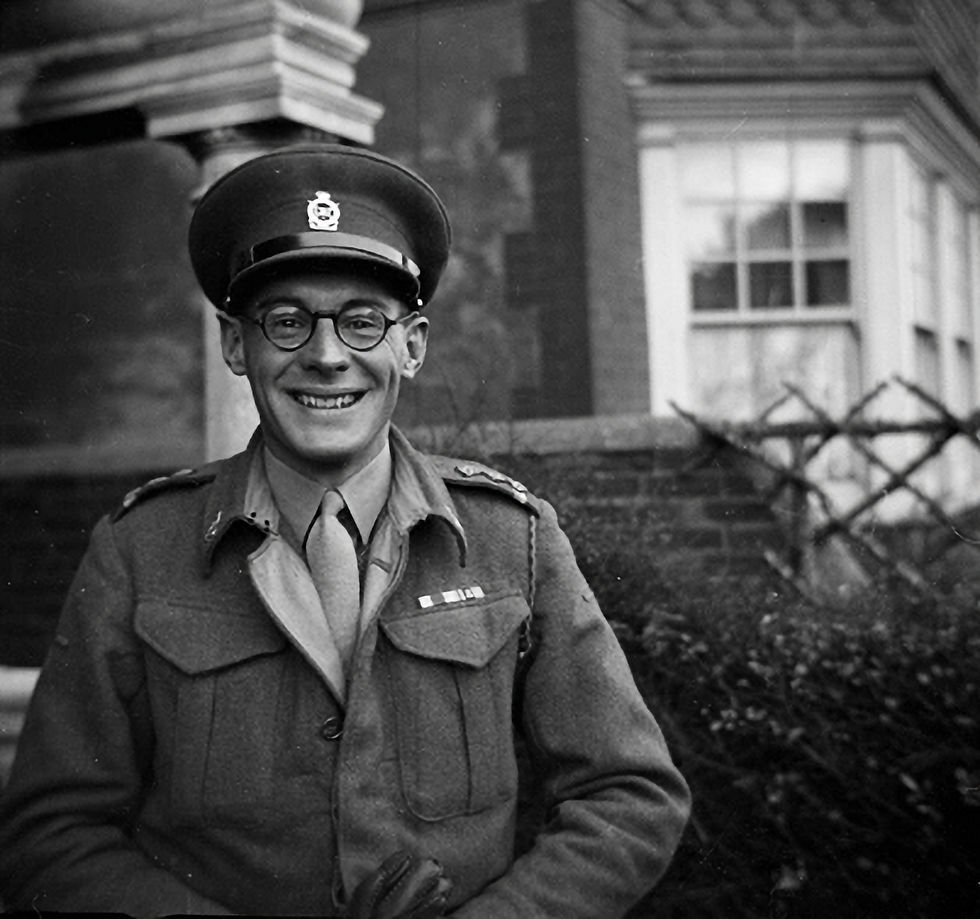
John Lampert Aitken was born on October 10, 1914, at 'Ickwell', Manor View, Finchley, and was baptised at St. Luke's Finchley on June 6, 1915. Born just months after the outbreak of World War I, Aitken would later find his own life defined by the next global conflict.
Before the war, Aitken established himself as a professional in civilian life, qualifying as a Chartered Accountant. As a member of the Institute of Chartered Accountants in England and Wales (ICAEW), his name would later be inscribed on their Roll of Honour, commemorating members who died during World War II.
John Aitken served in the Royal Armoured Corps, specifically with the 3rd County of London Yeomanry (Sharpshooters). The Sharpshooters had a distinguished history, having been raised in 1901 from veterans of the Second Boer War. Initially a yeomanry regiment, it evolved in response to changing military needs and was converted to an armoured role between the two world wars.
During World War II, the 3rd County of London Yeomanry played significant roles in several major campaigns. The Aitken’s regiment distinguished itself in the North African Campaign, notably at the Battle of El Alamein, where he received the Military Cross (MC), a prestigious decoration awarded for gallantry during active operations against the enemy.
MC Citation:
Capt Aitken has been in action with the Regiment in every engagement which it has fought during the period 1 May to 31 Oct 1942 and for much of that time he has had to act as troop leader.
His example of efficiency, determination and courage has at all times been an inspiration to those under his command, and on many occasions he has been able to send back accurate and valuable information by skill and daring in the leading of his troop when patrolling deep in enemy country.
On 29 May 1942 at Knightsbridge he personally destroyed two enemy tanks, which had got in a good position and were causing casualties. By skilful use of ground and closing his range to make sure that they would be effectively put out of action.
B.L Montgomery Lt Gen Eighth Army
Public Records Office WO 373/23
The regiment moved on to operations in Sicily and Italy. By mid-1944, the unit had returned to the United Kingdom to prepare for the opening of the Second Front in Northwest Europe.
By September 1944, following the successful Normandy landings and breakout, Allied forces were advancing rapidly across France and into Belgium. The 3rd County of London Yeomanry had suffered significant casualties. In August 1944, just a month before Aitken's death, the regiment was amalgamated with the 4th County of London Yeomanry to form the 3rd/4th County of London Yeomanry (Sharpshooters).
On September 20, 1944, Major John Lampert Aitken MC was conducting a reconnaissance patrol near Asch (now As) in Belgium. During this mission, his scout car struck a mine, resulting in his death at the age of 30. This reconnaissance mission was typical for armoured units, with scout vehicles operating ahead of central forces to gather intelligence on enemy positions and movements.
The area around Asch held strategic significance, as it was situated near the Belgian-Dutch border and formed part of the broader front established by Allied forces.


Comments